Doctors are now making their own "stacks." Walk into a longevity conference in 2026 and you'll hear physicians trade notes not on prescriptions, but on stacks — personal combinations of peptides, cofactors, and habits aimed at one unglamorous organelle: the mitochondrion. The people who spent their careers reading lab values are now running experiments on themselves. That shift is worth understanding, because the science underneath it is real even when the marketing around it isn't.
Why the mitochondria became the target
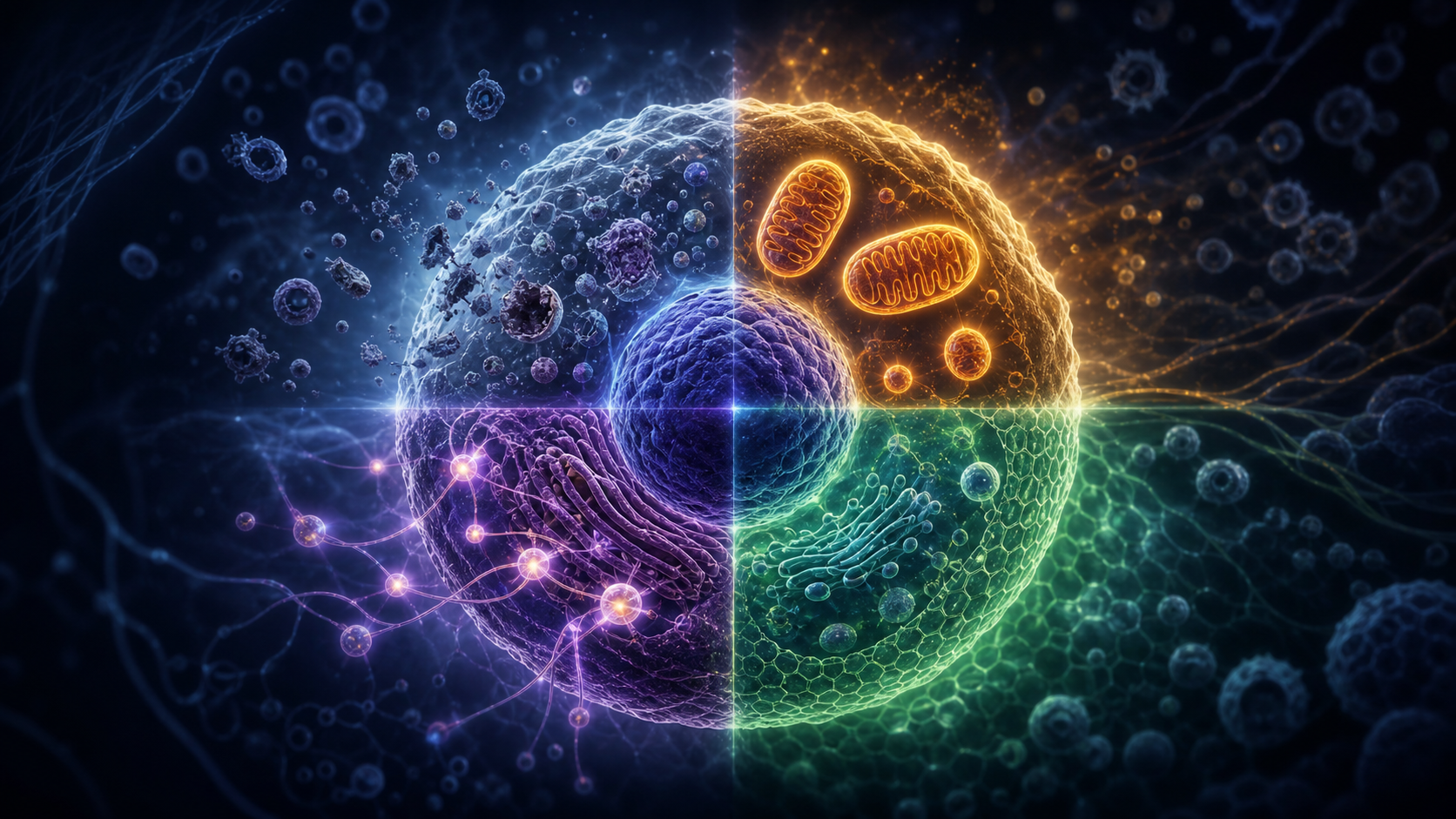
Every cell runs on a currency called ATP, and your mitochondria are the mints. They take food and oxygen and turn them into usable energy, thousands of times a second, in nearly every cell you have. When mitochondria work well, you feel it as steady energy, quick recovery, and a clear head. When they don't, the symptoms are frustratingly vague — fatigue, brain fog, slow healing — the kind of thing that rarely shows up on a standard blood panel.
Mitochondria also do more than make energy. They help decide when a damaged cell should repair itself versus quietly retire, they buffer stress signals, and their gradual decline tracks closely with how we age. That combination — central to energy, central to aging, and hard to measure — is exactly why they've become the obsession of the biohacking world.
Where peptides enter the story
Peptides are just short chains of amino acids — the same building blocks as the proteins your body already makes, only smaller. Your body uses its own peptides constantly as signaling molecules: little messages that tell tissues to grow, calm down, repair, or ramp metabolism up. The idea behind therapeutic peptides is to borrow that signaling language deliberately.
A few families get the most attention in mitochondrial circles:
- Mitochondrial-derived peptides — small peptides encoded within the mitochondria's own DNA that appear to influence metabolism and stress resistance. They're a genuinely exciting area of research.
- Repair and recovery peptides — compounds studied for tissue healing and inflammation, which is where a lot of the anecdotal "I recover faster" reports come from.
- Metabolic signaling peptides — molecules that nudge how cells handle glucose and fat, indirectly affecting mitochondrial load.
The honest summary: the biology is legitimate and the early research is interesting. That is not the same as "proven, safe, and ready to self-administer."
The "stack" mindset — and its blind spot
A stack is a systems idea: no single lever fixes a complex machine, so you pull several at once and watch what happens. Applied to mitochondria, a thoughtful version of that instinct is genuinely sound — and most of it isn't exotic at all:
- Load the machine. Zone-2 cardio and resistance training are still the most reliable way to build more and better mitochondria.
- Feed it, then rest it. Protein, real food, and honest sleep do more for cellular energy than any vial.
- Stop poisoning it. Chronic alcohol, wrecked sleep, and constant stress degrade mitochondria faster than any peptide can rebuild them.
The blind spot is what gets skipped in the excitement: much of what's sold for "mitochondrial optimization" is research-grade, unregulated, and unproven in humans at the doses people actually use. Purity varies wildly between suppliers. "A doctor takes it" is a story, not a safety study. And self-experimentation without labs, baselines, or supervision is how a promising molecule becomes an avoidable harm.
The honest takeaway
The reason smart, credentialed people are building their own stacks isn't hype — it's that mainstream medicine is slow to address the low-grade energy decline that mitochondria drive, and peptides sit at a fascinating frontier of that problem. That frontier deserves curiosity. It also deserves humility.
If you take one thing from the trend, let it be the framing, not the shopping list: your mitochondria are worth caring about, the biggest levers are still boring and free, and anything you put in your body to change cellular signaling is a medical decision — one worth making with a professional, not around one.
This article is educational and is not medical advice. Peptides and related compounds can carry real risks and are regulated differently across regions; talk to a qualified clinician before making any changes to your health regimen.